Selecting the right batting
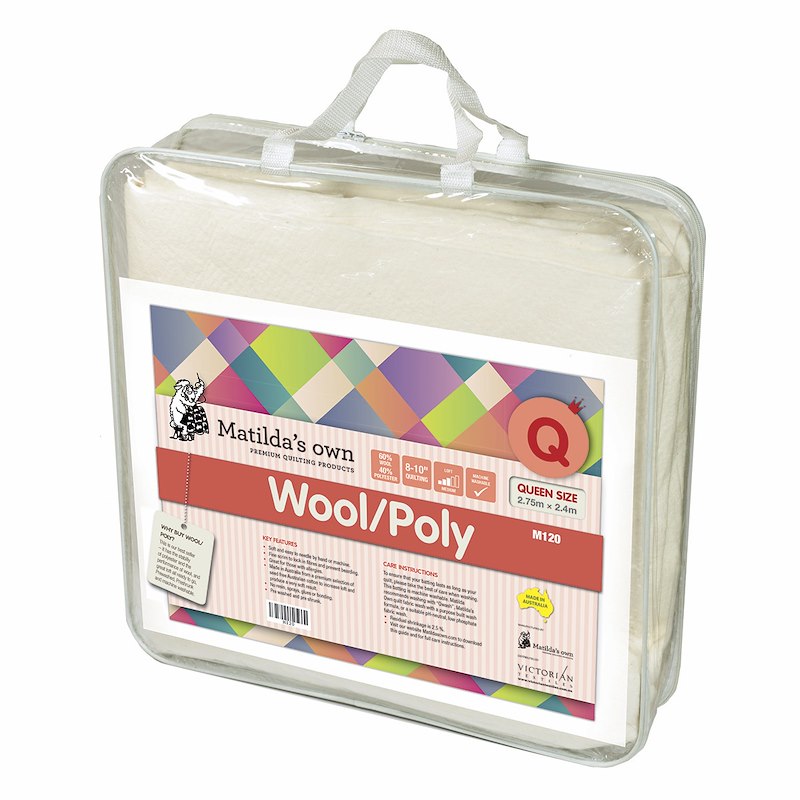
Batting, sometimes called wadding, is the layer which goes in between a quilt top and the backing. It provides the insulation which allows the quilt to prevent heat loss. It also provides thickness and affects the drape and look of the finished quilt.
Most batting is treated to prevent the fibres from separating once the quilt is finished and in use. There are a few different methods for achieving this.
Needle punching is one method used today. The fibres are punched through a fine netting or scrim in a process which causes tangling of the fibres. This holds the fibres together. Batting can be needle punched without scrim. This results in a softer batting but the fibres can be more easily pulled apart.
Other methods use glues or heat to bind fibres together but result in a stiffer batting.
Batting which has been needle punched with scrim can be quilted with stitching as much as 25cm apart and will hold together well without separation of fibres. Batting without scrim should be quilted with stitches no more that 15cm apart for stability.
Main characteristics of batting
Loft
This term refers to the weight and thickness of batting. Low loft batting is thin and high loft batting is thick.
Insulating properties
Wool is the most effective insulating batting material, followed by polyester, then bamboo, and lastly cotton.
Colour
Batting is available in white, natural, and black. Black is a good choice when the quilt top is made with darker colours.