
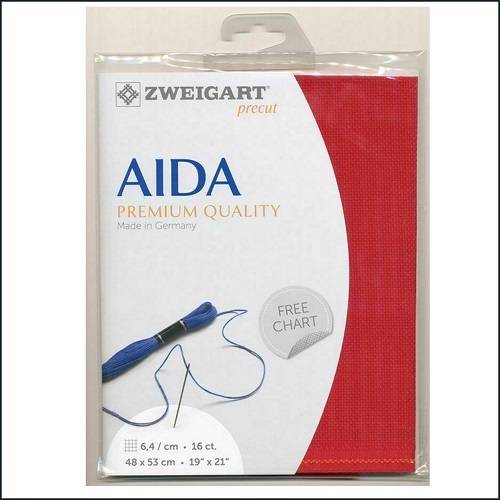
Quality features:
I always use a good quality aida cloth for cross stitch designs. It is essential to have an even weave so that warp and weft threads form squares where they cross and there are the same number of threads in every inch or centimetre across all of the fabric surface. This makes is possible to get a result with even and square crosses.
Quality brands:
Zweigart aida cloth is my absolute favourite because of the precision of it’s weave. It has 4 threads in warp and weft which creates tiny holes. These can be varied in size to give a finer or courser fabric. It also has a nice feel which is firm but not stiff. I like it best for my cross stitch.
Zweigart Easy Count comes with a water soluble grid to make counting easier but it is very soft. I personally prefer something a little firmer.
DMC also makes a good aida cloth which has a very even weave. It is a bit stiffer than Zweigart but this can be a good thing if you like working without a hoop. I have used it for some designs and enjoyed working on it.
Cheaper brands:
There is cheaper unbranded aida cloth available. Some of these have a looser, more open weave which can make producing an evenly stitched result more difficult. My feeling is that if I am to invest a lot of time in working on a cross stitch project then I want it to be done with quality materials that will increase my chances of ending up with a great result.
Happy crossing!
- Details
-
By Maureen Maguire
- Category: Selecting the right product

Aida Thread Counts:
Aida cloth comes in different thread counts. Count in this instance refers to the number of square holes, between the threads in the weave of the fabric, in each inch. The most common aida thread counts are 6ct, 8ct, 11ct, 14ct, 16ct, and 18ct. The larger the number of squares in each inch the smaller the stitches will be making more detail possible in the design.
Evenweave, Linen and Aida:
Evenweave fabrics like Aida and linen have the same number of threads in both warp and weft. This makes the small holes between threads all the same size and results in even cross stitches.
A high thread count like 18ct will result in smaller finished project than 6ct or 11ct when stitching the same design.
Linen is also an evenweave fabric and it has high thread counts. Linen comes in anything from 22 stitches to 40 stitches in each inch. Cross stitch is usually worked over 2 holes when working on linen. The same pattern worked on 28 count linen and on 14 count aida will result in similarly sized finished designs.
The different sized holes in the various thread counts will each work best with needle sizes as listed in our guide to best needle sizes. See below and in our needle size article.
A guide to best needle size for aida and linen.
- Needle Size 18 – 6 count aida fabric – 3 strands of floss
- Needle Size 20 – 8 count aida fabric – 3 strands of floss
- Needle Size 22 – 11 count aida fabric – 3 strands of floss
- Needle Size 24 – 14 count aida fabric or 28 count linen – 2 strands of floss
- Needle Size 26 – 16 count aida fabric or 32 count linen – 2 strands of floss
- Needle Size 28 – 18 count aida fabric or 36 count linen – 1 or 2 strands of floss
Choosiing the thread count that suits your project, your skill level, and your eyesight will impact your enjoyment of the task and the beauty of the end result.
Happy crossing!
Check out our wide variety of premium quality Zweigart Aida cloth in a range of colours and thread counts including precuts, bands, and by the metre.
- Details
-
- Category: Selecting the right product
Tapestry Needle Features:
Tapestry needles have blunt points and large eyes. They are designed for stitching by hand on open weave fabrics like Aida, or tapestry canvas.
The blunt point on the needle allows a stitcher to pull threads through the holes in an open weave fabric without piercing or splitting the fibres in the weave.
The large eye allows the use of a wide variety of thread from stranded cotton to tapestry wool and protects the thread as it passes through the weave.
Tapestry needles come in different sizes denoted by numbers: the larger the number the smaller the needle.
The best needle size to select for a project is determined by the thread count of the fabric e g 6 count fabric has larger holes than 18 count fabric and so will work best with a larger needle. Read our article about thread counts.
A guide to best needle size for aida and linen.
- Needle Size 18 – 6 count aida fabric – 3 strands of floss
- Needle Size 20 – 8 count aida fabric – 3 strands of floss
- Needle Size 22 – 11 count aida fabric – 3 strands of floss
- Needle Size 24 – 14 count aida fabric or 28 count linen – 2 strands of floss
- Needle Size 26 – 16 count aida fabric or 32 count linen – 2 strands of floss
- Needle Size 28 – 18 count aida fabric or 36 count linen – 1 or 2 strands of floss
Order your tapestry needles here.
- Details
-
- Category: Selecting the right product
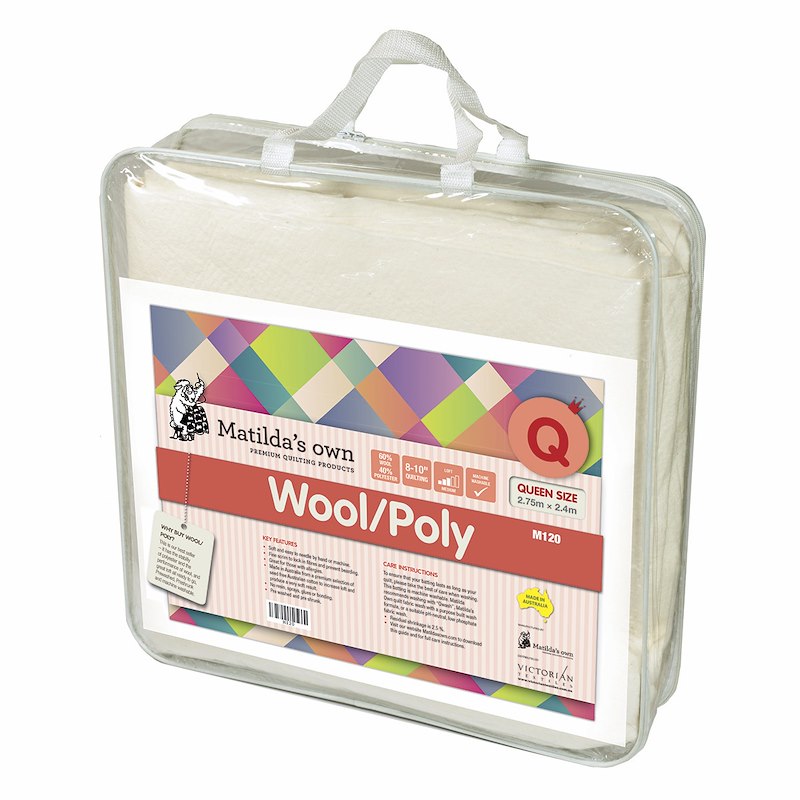
Selecting the right batting
Batting, sometimes called wadding, is the layer which goes in between a quilt top and the backing. It provides the insulation which allows the quilt to prevent heat loss. It also provides thickness and affects the drape and look of the finished quilt.
Most batting is treated to prevent the fibres from separating once the quilt is finished and in use. There are a few different methods for achieving this.
Needle punching is one method used today. The fibres are punched through a fine netting or scrim in a process which causes tangling of the fibres. This holds the fibres together. Batting can be needle punched without scrim. This results in a softer batting but the fibres can be more easily pulled apart.
Other methods use glues or heat to bind fibres together but result in a stiffer batting.
Batting which has been needle punched with scrim can be quilted with stitching as much as 25cm apart and will hold together well without separation of fibres. Batting without scrim should be quilted with stitches no more that 15cm apart for stability.
Main characteristics of batting
Loft
This term refers to the weight and thickness of batting. Low loft batting is thin and high loft batting is thick.
Insulating properties
Wool is the most effective insulating batting material, followed by polyester, then bamboo, and lastly cotton.
Colour
Batting is available in white, natural, and black. Black is a good choice when the quilt top is made with darker colours.
Batting Types
Wool: Great for hand or machine quilting and has the best insulating properties.
Polyester: Perfect for hand quilting and also fine for machine quilting. Light weight.
Bamboo: Ideal for machine quilting. Environmentally friendly production process.
Cotton: Great for machine quilting but can be difficult to hand quilt.
Blended Fibres: These combine the best qualities of the incorporated fibres.
Heat resistant: Use for oven gloves, place mates, and other items requiring heat resistance.
Fusibles: This batting makes patchwork quilting projects easier by eliminating the need to baste, pin, or tack. It is best used on small projects.
- Details
- Category: Selecting the right product
Cross Stitch Favorites
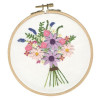
Our range of counted cross stitch kits, and charts includes designs from brands like DMC, Country Threads, Caronie, and Make It . You will find Australian animal and bird designs, floral cross stitch designs, Australian cross stitched landscapes, and childhood or birth celebration designs. Some of our cross stitch charts can be downloaded after purchase
Shop by Category




Search by Brand



















Difficulty levels for kits
Techniques To Try
We offer ...
Weight calculated postage.
Safe shopping with PayPal or Stripe.
10% everyday discount for registered customers.
Newsletter
Payments, including credit cards, processed by
 OR
OR  Paypal